
Disposable vs Rechargeable THC Vapes: Choosing the Right Device
Introduction
The THC vape market has split into two main options: single-use disposables and refillable rechargeable pens. The choice affects cost, experience, and environmental impact. This guide organizes disposable THC vape pros cons so you can compare quickly.
This article compares both formats using clear criteria and real-world scenarios, weighing their pros and cons without marketing spin. Throughout, we call out disposable THC vape pros cons in plain terms.
Analysis of Devices
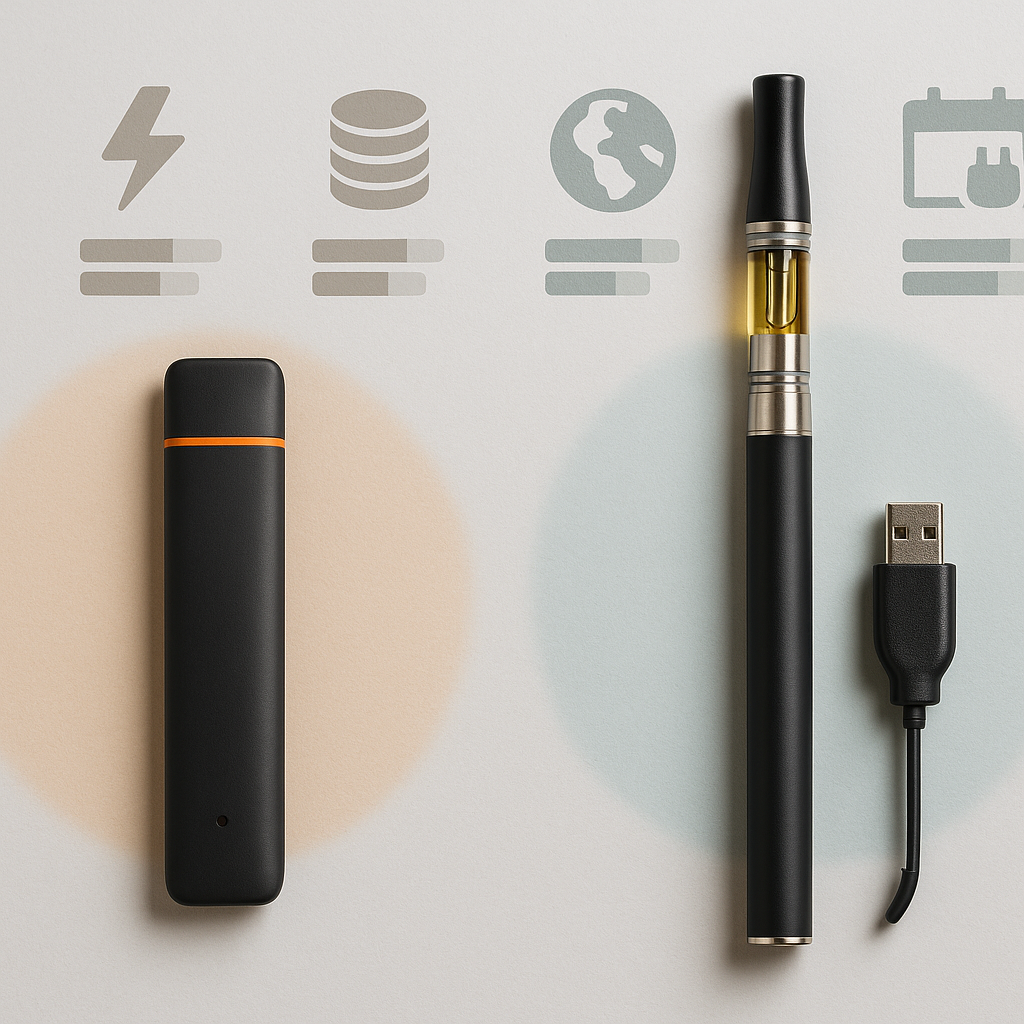
Disposables arrive ready to use, usually with draw activation and consistent dosing. They are simple but offer little control over temperature, airflow, or concentrate choice. For shoppers, mapping disposable THC vape pros cons starts with this trade-off between simplicity and control.
Rechargeable pens pair a battery with cartridges or pods and require a bit more setup. Their modular design lets you choose different concentrates and compatible prefilled cartridges, broadening options for potency and flavor. This section also clarifies disposable THC vape pros cons versus modular kits.
Hardware quality drives results. Low-cost disposables may use thin wicks and cool coils, leading to weak vapor and uneven doses. Well-made batteries and matched cartridges tend to deliver steadier heat and more consistent vapor. Hardware quirks often explain real-world disposable THC vape pros cons users report.
Battery performance matters. Disposables use small cells sized for their short life. Rechargeables can use larger or replaceable batteries, supporting longer, more predictable output. In practice, rechargeable vape pen batteries narrow many disposable THC vape pros cons tied to weak power delivery.
Key Factors
For most users, battery life and charging shape daily use. For steady sessions, robust rechargeable systems outperform disposables over time. For occasional or travel use, disposables remove the need to carry chargers and spares. Considering these dynamics helps frame disposable THC vape pros cons for different routines.
Interchangeable cartridges add flexibility and improve prefilled cartridge compatibility across brands. If you like specific concentrates or switch strains, systems with swappable cartridges help. Most disposables lock you into a single formulation, which is a classic point in disposable THC vape pros cons discussions.
Within rechargeables, pod systems vs cartridges is a secondary choice. Pod systems often prioritize simplicity and leak resistance. Standard 510 cartridges offer wider third-party options and more airflow choices. Understanding this split sharpens how you see disposable THC vape pros cons relative to modular formats.
Costs split between upfront and ongoing. Rechargeables cost more at the start, while disposables add recurring expense. A cost per puff comparison often favors rechargeables after a break-even point that depends on how much you use and local pricing, another lens on disposable THC vape pros cons.
From an environmental view, waste and recyclability are major concerns. Single-use devices create more electronic and plastic waste per dose, and mixed materials are hard to recycle. Rechargeables focus waste into batteries and cartridges, which are easier to replace or recycle selectively. This is one of the most cited disposable THC vape pros cons trade-offs.
Performance and Experience
Vapor quality depends on coil and wick materials, heating method, and concentrate viscosity. Quality rechargeable setups typically deliver fuller flavor and denser clouds. These technical factors underpin many disposable THC vape pros cons you read about.
Temperature control and variable voltage are more common in rechargeables. These settings affect terpene preservation and THC conversion, shaping both flavor and perceived strength.
Consistency often slips with budget disposables as voltage drops, changing dose size and heat. Rechargeables hold steadier output until the battery runs low, and many include indicators to set expectations.
Safety and Compliance
Hardware standards vary. Counterfeit or off-spec disposables have been linked to poor soldering and unstable batteries. Rechargeable platforms make it easier to source verified batteries and tested cartridges, reducing some risks.
Clear labeling and lab-tested concentrates matter for any device. Wide cartridge compatibility from reliable suppliers adds traceability that single-use devices sometimes lack. Look for transparent testing and full ingredient lists to minimize typical disposable THC vape pros cons.
Scenario Matchups
Scenario 1: Light, occasional user who wants discretion and no maintenance. A disposable fits best: easy, no charging.
Scenario 2: Daily user seeking economy and control. A rechargeable pen with swappable cartridges usually wins on cost and consistency after reaching the break-even point.
Scenario 3: Flavor-focused user who switches strains. Systems with broad prefilled or 510 cartridge access enable precise terpene and potency choices.
Scenario 4: Traveler who needs reliability without chargers. Disposables offer predictable uptime but raise waste and long-term costs if used often.
Scenario 5: Sustainability-minded buyer. Modular rechargeables reduce waste and simplify recycling compared with single-use devices.
Market and Regulatory Context
Regulation shapes what’s available and how it’s made. Where safety and testing rules are strict, certified cartridges are gaining ground while anonymous disposables decline. That trend favors rechargeables tied to compliant supply chains.
Retail channels differ. Licensed dispensaries are more likely to stock tested cartridges compatible with reputable batteries. Informal sellers often carry cheaper disposables with variable sourcing and quality control.
Conclusion
The choice between disposable and rechargeable vapes comes down to clear trade-offs: upfront vs. lifetime cost, convenience vs. control, and added waste vs. targeted recyclability. Weigh these against your consumption, and how much you value flavor, control, and environmental impact.
For frequent users, quality rechargeable batteries with compatible cartridges usually deliver better value, performance, and lower long-term waste. For infrequent or highly mobile users, disposables still make sense for their simplicity.
Choose based on battery needs, cartridge compatibility, cost per puff, and how you plan to handle waste. This framework helps cut through marketing and focus on technical and financial realities. It distills the core disposable THC vape pros cons for easier decision-making.
